

Key Highlights
-
Stress can contribute to facial peeling by weakening skin barrier function and increasing moisture loss.
-
Elevated cortisol can affect the skin barrier, while stress may also worsen eczema and sensitivity.
-
Peeling may appear alongside breakouts, redness, increased sensitivity, and dullness
-
Persistent, spreading, painful, cracked, swollen, or non-improving peeling warrants professional assessment.
-
Gentle skincare, consistent moisturizing, avoiding harsh actives, and managing stress can help calm stressed skin.
-
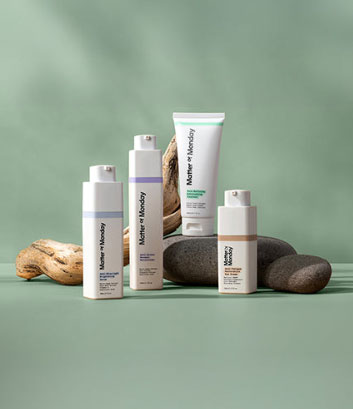
Matter of Monday offers barrier-focused skincare designed to support skin exposed to everyday stress.
Somewhere between the third coffee and the fifth Slack notification, you catch your reflection in your laptop camera and do a double take. Is that flaking around your nose, maybe your chin, skin that looked fine last week and definitely doesn't now?
You're not imagining the timing, either. Skin has a way of showing exactly what kind of week you've had, whether you meant it to or not.
It's an easy thing to dismiss at first. A new cleanser, the weather, maybe you forgot to moisturize one too many nights. But when the timing lines up with your worst week at work, and the skincare routine hasn't changed, it's worth asking a more direct question: is your stress actually doing this to your face?
For working women and remote workers running on back-to-back meetings and too little sleep, that question comes up more than you'd think, and the honest answer isn't as simple as yes or no.
This guide breaks down exactly how stress affects your skin barrier, what else it tends to bring along with it, when peeling is worth a dermatologist visit instead of a new moisturizer, and what actually helps in the meantime.
Can Stress Actually Make Your Skin Peel?
Yes. Not always as the sole cause, but stress is a real, physiological trigger for skin peeling, and the mechanism behind it is well understood.
When you're stressed, your body releases cortisol. In small doses, that's a normal stress response. But when stress becomes chronic, elevated cortisol starts interfering with your skin barrier, the outer layer that keeps moisture in and irritants out.
A weakened barrier loses water faster than it should. Skin gets dry. Dry skin flakes. Flaking is peeling. Stress can also flare up existing skin conditions. Eczema and general sensitivity all tend to get worse under stress, and any of them can cause peeling on top of everything else going on.
This is exactly the kind of pressure Matter of Monday was built around. We're a skincare brand designed for people living fast-paced, screen-heavy lives, the ones spending hours in front of a laptop, running on too little sleep, and feeling it show up on their skin before anywhere else.
Rather than waiting for stress-related damage to become visible and then trying to correct it, we take a prevention-first approach, supporting skin consistently so it's better equipped to handle exactly this kind of pressure in the first place.
Why Might Stress Contribute to Peeling?

Stress doesn't peel your skin directly. It works through a few different channels, and they tend to build on each other rather than act alone.
-
Barrier function: the skin barrier is what keeps moisture in and irritants out. Elevated cortisol interferes with that function, leaving skin more exposed than it should be.
-
Dryness: a weakened barrier can't hold onto hydration the way healthy skin does, so water escapes faster than it can be replaced. Dry skin flakes, and flaking is peeling.
-
Existing skin conditions: if you already deal with eczema or general sensitivity, stress tends to make it worse, and peeling often comes along with the flare-up.
-
Stress-related lifestyle changes: stress rarely shows up alone. It tends to bring less sleep, more face-touching, and skipped skincare steps with it, and each of those adds another layer to the same problem.
None of these on their own always lead to peeling. But stacked together over days or weeks, they usually do.
How Can Stress Contribute to Skin Peeling?
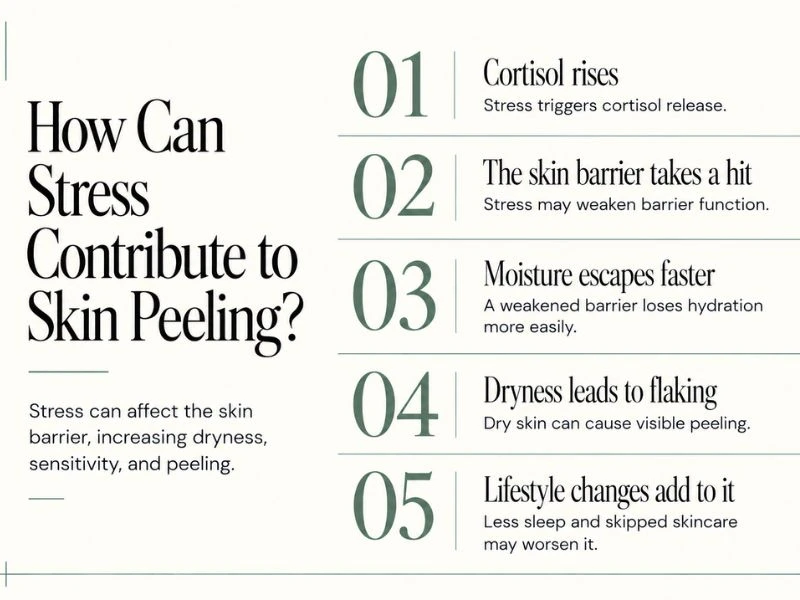
Stress doesn't cause peeling directly. It sets off a chain reaction, and peeling is just where that chain ends up, impacting various skin concerns. Here's how it plays out, step by step:
-
Cortisol rises first. Your body treats ongoing stress the same way it treats a physical threat. Cortisol is part of that response, even when the "threat" is just an overloaded inbox.
-
The skin barrier can take a hit. Prolonged psychological stress and associated stress hormones may impair skin-barrier function by affecting epidermal lipids and structural proteins, which can increase water loss and reduce hydration.
-
Moisture starts escaping faster than it should. A compromised barrier can't hold onto hydration the way healthy skin does. Water evaporates off the surface faster than your skin can replace it.
-
Dryness builds, then the outer layer starts to shed unevenly. That uneven shedding is what shows up as visible flaking or peeling.
-
Habits pile on top of the hormonal shift. Stress usually comes with less sleep, more face-touching, and skipped skincare steps. Each one adds to the same problem.
None of this happens overnight. It's usually the result of stress building for days or weeks before your skin visibly reacts, which is part of why the connection is so easy to miss at first.
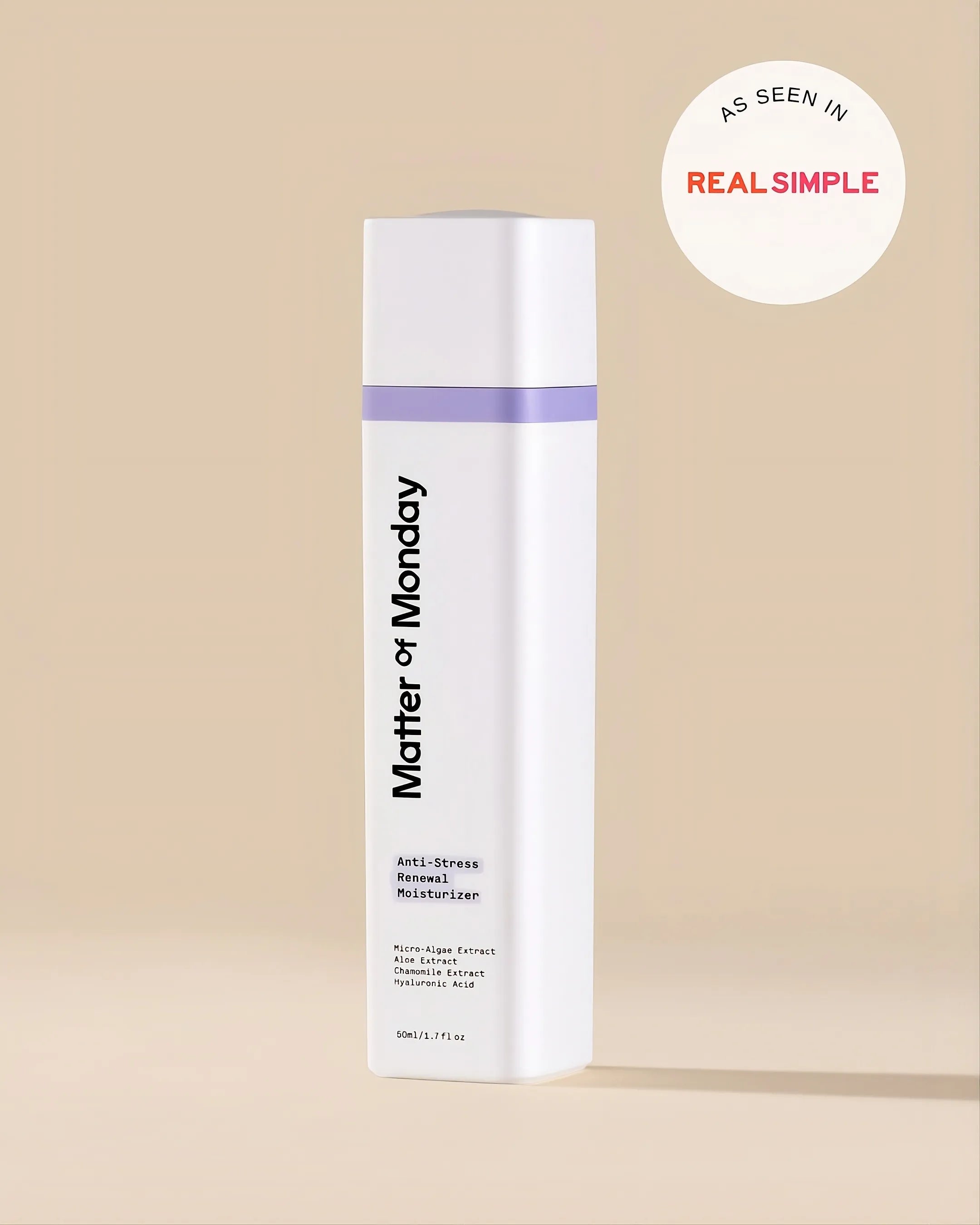
This is exactly why barrier support matters more than surface hydration when stress is the root cause. Our Anti-Stress Renewal Moisturizer was formulated with that specific chain reaction in mind, and with the screen-heavy lifestyle that so often triggers it.
It's built to counter what daily digital exposure and stress do to the barrier, collagen, and hydration balance, calming inflammation early rather than just adding a layer of cream on top of a problem underneath.
What Other Signs Show Stress Is Affecting Your Skin?
Peeling rarely shows up alone. If stress is behind it, there's a good chance it's leaving other marks too, just less obvious ones you might have chalked up to something else entirely.
-
Breakouts, even on skin that doesn't usually get them. Cortisol can ramp up oil production, and that extra oil clogs pores that were otherwise behaving fine.
-
A dull, flat complexion. Stress affects circulation and slows cell turnover, so skin doesn't get the same natural glow it usually does.
-
Redness or sudden sensitivity to products you've used for months. A weaker barrier reacts more easily to everything, like weather, touch, and ingredients that never bothered you before.
One symptom on its own could be a lot of things. But if you're noticing two or three of these at the same time as the peeling, stress is worth treating as the common thread, rather than chasing each symptom with a different product.
When Should You Worry About Peeling Skin?
Most stress-related peeling responds well to gentler skincare and gradually improves once things calm down. But some signs are worth taking to a dermatologist instead of waiting it out. Here are some of them:
-
Peeling that keeps coming back or spreads to new areas
-
Skin that burns, stings, or cracks
-
Swelling alongside the peeling
-
Peeling that doesn't improve after a few weeks of gentle care
-
Peeling that appears after starting a new skincare product or medication
A dermatologist can rule out other causes, like an underlying skin condition or a reaction to a product, that stress alone wouldn't explain.
How to Calm Stress-Related Skin Peeling?

When skin starts acting up, the instinct is to reach for something stronger. With stress-related peeling, that usually backfires. Here's what actually helps:
-
Simplify your routine, at least for now. Skip harsh actives, exfoliants, and anything new while skin is already compromised. This isn't the moment to test a product that could add more irritation on top of what's already there.
-
Prioritize hydration, and stick with it. A lightweight, barrier-supporting moisturizer does more here than a trendy serum ever will. Consistency matters more than any single ingredient.
-
Look for ingredients that calm, not strip. Aloe, chamomile, and hyaluronic acid support the skin's natural moisture balance. Anything designed to exfoliate or resurface works against what your barrier needs right now.
-
Don't skip moisturizer even if skin feels oily. Peeling and oiliness can happen at the same time. Dehydrated skin often overcompensates with oil on the surface, so cutting moisturizer usually makes things worse, not better.
-
Address the stress itself where you actually can. Skincare supports your skin, but sleep, breaks, and pulling back on your workload do the heavier lifting. No formula replaces that.
None of this requires an elaborate routine. It just requires doing the basics consistently, instead of reaching for something new every time skin looks a little off.
Why Does the Right Moisturizer Matter for Stressed Skin?

Not every moisturizer is built for this specific problem. Many hydrate the surface without supporting the barrier underneath, which is what's really struggling when stress is involved.
Our Anti-Stress Renewal Moisturizer takes a different approach. Aloe brings anti-inflammatory support and moisture to already irritated skin. Chamomile extract calms inflammation further, taking some of the redness and reactivity down a notch.
Micro-algae extract works on free radical damage while helping skin hold onto hydration. Sodium hyaluronate, a smaller-molecule form of hyaluronic acid, penetrates deeply rather than sitting on the surface, so hydration actually reaches the layers that need it.
The result is a lightweight, non-greasy formula that absorbs quickly and layers well under makeup without pilling. Skin looks visibly plumper and softer, not just less dry. It's fragrance-free and gentle enough for sensitive skin.
It's vegan and cruelty-free too. For skin that's already under enough pressure, that gentleness isn't a nice extra. It's the whole point.
Okay, But What Are People Saying?
The moisturizer is lightweight and not greasy. I use it twice a day. My skin feels soft and hydrated.
This moisturizer felt SO good on my skin! I have sensitive skin and had absolutely no issues, and it absorbs well into the skin. No greasiness, just pure hydration! It's a must have and the slide-up pump is such a good feature and makes it easy to throw in my bag.
Ready to give your skin a little extra support? Shop the Anti-Stress Renewal Moisturizer.
Why Choose Matter of Monday for Stressed Skin?
Most stressed-out skin gets met with more. More products. More steps. More things to remember on a day when you already have too much to remember. That approach backfires almost every time. Overloaded, reactive skin doesn't need more. It needs the right support, applied consistently.
At Matter of Monday, we do the opposite. Every formula is built around clean, safe ingredients that work with your skin, not against it. No unnecessary fillers.
No harsh actives thrown in just to look more effective on a label. Our airless pump packaging keeps every formula fresher and more potent, and it's travel-ready and TSA-friendly, built for exactly the kind of life that causes stressed skin in the first place.
Board-certified dermatologists stand behind every formula, because they know what actually helps skin recover from stress: gentle, consistent care, not one more aggressive treatment piled onto an already long list.
Ready to give your skin the support it's actually asking for? Explore the Anti-Stress Renewal Moisturizer today.
The Bottom Line
There's something unfair about stress showing up on your face. You're already carrying it everywhere else, in your shoulders, your sleep, your ability to sit still for five minutes. Watching it show up on your skin too can feel like one more thing you didn't sign up for.
But your skin isn't betraying you. It's just telling you the truth about a week, or a month, that's been a lot. That's worth listening to, not just covering up.
Frequently Asked Questions
Can stress make your face skin peel?
Yes, stress can contribute to facial peeling by affecting barrier function and the skin’s natural barrier. Stress hormones, including cortisol levels, may increase dryness and irritation, while a gentle skincare routine supports barrier repair daily.
Does stress cause dry skin on face?
Stress can contribute to dry skin on the face due to stress by affecting the skin barrier and increasing moisture loss. Ongoing stress may also worsen existing skin conditions, making dryness, flaking, and irritation more noticeable.
Can a skin rash on face caused by stress go away on its own?
Yes, a rash may improve when stress levels settle, especially if effects of stress trigger skin problems rather than a chronic skin condition. A gentle skincare routine and stress management can support healthier skin while symptoms resolve.
How long does stress-related skin peeling last?
Stress-related skin peeling may improve as stress levels decrease, but timing varies. Lack of sleep, skin issues, or a chronic skin condition can prolong symptoms. Good news: stress management and a gentle skincare routine may help.
Should you exfoliate peeling skin?
Usually, avoid exfoliating peeling skin because it can further disrupt the skin barrier and worsen skin issues. A gentle skincare routine, plenty of water, and skin care can support barrier repair and healthier skin.
Why does my skin get drier or more sensitive when I'm stressed?
During times of stress, stress hormones and cortisol levels can affect barrier function, causing moisture loss and sensitivity. Lack of sleep may add to these effects, making existing skin issues more noticeable.
What does a stress face look like?
A stress face may include dark circles, adult acne, oily skin, or itchy skin. High stress can influence blood vessels, skin cells, and barrier function, while lack of sleep may make these changes more noticeable.