

Key Highlights
-
Gentle exfoliation can help clear dead skin cells, oil, and buildup that contribute to clogged pores and acne.
-
Over-exfoliating or using harsh physical scrubs can irritate the skin barrier and worsen breakouts.
-
Gentle enzyme-based exfoliation may be an option for acne-prone skin, particularly when you want to avoid harsh physical scrubbing.
-
Start slowly, avoid stacking strong actives, and adjust exfoliation based on redness, tightness, dryness, or new breakouts.
-
Exfoliation may help fade surface-level acne marks, but deeper scars generally need professional treatment.
-
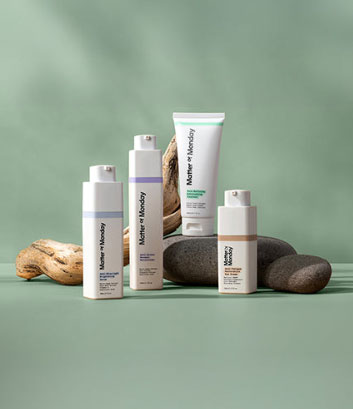
Matter of Monday’s Pore-Refining Exfoliating Cleanser uses papaya and pineapple enzymes to gently exfoliate, decongest pores, and support acne-prone, sensitive skin.
You finally get one breakout under control, and a new one shows up somewhere else on your face like it's taking turns.
At some point in that cycle, someone tells you to try exfoliating, and you hesitate, because the last thing frustrated, breakout-prone skin needs is another product that makes things worse.
It's a fair hesitation. For working women and remote workers already juggling enough without adding a skincare guessing game, the real question isn't just "does exfoliating help with acne?" it's whether it's worth the risk.
Here's what's actually happening on your skin, and how to know whether exfoliation deserves a spot in your routine.
How Does Exfoliation Actually Help With Acne?

Acne develops when hair follicles become clogged with excess oil and dead skin cells, with inflammation and Cutibacterium acnes also playing a role. Early on, that buildup shows up as congestion, enlarged pores, blackheads, and persistent oiliness around the chin and nose.
Left alone, it can progress into active breakouts, whiteheads, and inflamed pimples that often show up in clusters, at different stages of healing.
Exfoliation intervenes earlier in that process than most people realize. Here's what it's actually doing underneath the surface:
-
Unclogging pores before they can trap anything: Dead skin cells that stick around too long can mix with oil and settle into pores. Regular exfoliation can help remove some of that buildup, reducing the material that may contribute to blockages.
-
Working on the oil itself, not just what's sitting on top: AHAs mainly loosen dead skin cells on the surface, while oil-soluble BHAs such as salicylic acid can penetrate pores and help clear excess oil and debris. Enzymes work differently again, breaking down proteins that hold dead skin cells together.
-
Reducing surface buildup: When dead skin cells accumulate, they can contribute to clogged pores. Gentle exfoliation can help remove some of that surface buildup.
-
Reducing pore-clogging buildup: By helping remove excess dead skin cells and buildup, exfoliation may make pores less likely to become congested.
-
Supporting smoother-looking skin: Gentle exfoliation can remove surface buildup and improve the look and feel of uneven texture, but it shouldn't be used to aggressively treat inflamed pimples.
-
Improving surface texture: Removing excess dead skin cells can leave skin feeling smoother and may help skincare products apply more evenly.
So, is exfoliating good for acne? Yes, but the honest version comes with a condition. It has to be the right method, at the right frequency, for your skin. Get that wrong, and you can just as easily end up with the stripped, irritated skin that makes breakouts worse instead of better.
This is exactly why Matter of Monday's prevention-first approach puts exfoliation front and center rather than treating it as an afterthought. Our Pore-Refining Exfoliating Cleanser is formulated with clean ingredients specifically to help decongest pores and minimize the buildup that leads to blackheads and breakouts, before they become visible problems.
There's no tight, stripped feeling afterward; it's gentle enough for daily use, morning or night, and it's fragrance-free, making it suitable even for sensitive skin.
Can Exfoliating Make Acne Worse?

It can, and this is usually the part that gets left out of "exfoliation cures acne" advice. Here's where it actually goes wrong:
-
Physical scrubs with rough, jagged particles. Under a microscope, ingredients like walnut shell or apricot pit are irregular and sharp-edged, capable of creating micro-tears in already-inflamed skin. Those tears don't just hurt; they can spread the bacteria you were trying to clear away.
-
Over-exfoliating. Doing it too often can damage or irritate the skin barrier, leaving your skin dry, tight, red, or more sensitive.
-
Combining too many potentially irritating actives: Using an exfoliant alongside acne treatments such as retinoids or benzoyl peroxide may increase dryness and irritation, so introduce products gradually and follow product or dermatologist guidance.
-
Scrubbing over active breakouts. Avoid aggressive scrubbing over active, painful, or inflamed breakouts. Friction can further irritate the skin and worsen inflammation.
None of this means exfoliation is off the table. It means gentler, more consistent methods tend to outperform aggressive ones for acne-prone skin specifically, and the difference between "this helped" and "this made it worse" usually comes down to exactly these details.
Does Exfoliating Help With Acne Scars?
Active breakouts and acne scars are two different problems, and exfoliation doesn't treat them the same way. For post-inflammatory hyperpigmentation (PIH), the flat, discolored spots left behind after a breakout heals, gentle exfoliation may help improve the appearance of uneven tone over time. Acne-related dark spots can take months to fade, so manage them without irritating the skin.
Deeper, textured scarring, the kind that leaves an actual indent or raised area, is a different story. Exfoliation alone won't reach that layer of skin, and getting rid of acne scars at that depth usually calls for a dermatologist and treatments like microneedling or laser resurfacing, not a cleanser.
So exfoliation for acne marks is genuinely worth doing, just don't expect it to erase deeper scarring on its own. It's one piece of a longer-term approach, not a fix by itself.
This is where a gentle formula matters even more than usual. Skin that's actively healing from a breakout is already more sensitive, so a harsh exfoliant can slow that process down instead of helping it.
Matter of Monday's Pore-Refining Exfoliating Cleanser is suitable for sensitive skin and doesn't strip it, so it can support cell turnover consistently without adding fresh irritation to skin that's already trying to recover.
How to Exfoliate Acne-Prone Skin Safely?

Knowing exfoliation can help is one thing. Doing it in a way that actually keeps your skin calm is the part that matters:
-
Start slow. If you're new to exfoliating, 2 to 3 times a week is a safer starting point than jumping straight to daily use; your barrier needs time to adjust before it can handle more.
-
Choose a gentle formula over an aggressive one. A gentle enzyme-based exfoliant may be an option if you want to avoid harsher physical scrubbing, but the formula and your skin's tolerance matter more than the exfoliant category alone.
-
Exfoliate on clean skin. Working through a layer of makeup or built-up oil means the product is fighting debris instead of doing its actual job.
-
Avoid stacking actives. Skip layering strong acne treatments and strong exfoliants on the same day; give your skin one job to focus on at a time.
-
Watch how your skin responds. Increased redness, tightness, or new breakouts are signs to scale back, not push through. Progress with acne-prone skin is rarely about doing more; it's about doing the right amount consistently.
-
If your acne-prone skin also runs dry, go gentler still. Exfoliating dry, acne-prone skin with a harsh formula can trigger flaking and irritation without calming breakouts; an enzyme-based option is often the more forgiving choice.
Why Is Enzyme Exfoliation Worth Considering for Acne-Prone Skin?

Salicylic acid is a well-established acne ingredient because it helps unclog pores. But not everyone wants or tolerates every type of exfoliant, particularly when their skin is already dry or sensitive.
One gentler option is Matter of Monday's Pore-Refining Exfoliating Cleanser, which uses papaya enzyme as a natural exfoliant alongside pineapple enzyme.
Papaya enzyme also has antioxidant and anti-inflammatory properties, while pineapple enzyme helps brighten the skin and remove dull surface cells.
Citrus fruit peel extracts help keep oil and pore appearance in check. Bamboo stem powder quietly strengthens the skin barrier instead of wearing it down.
What you feel afterward says it all: clean skin with no tight, stripped aftermath, gentle enough to reach for every day, morning or night, and vegan, cruelty-free, and fragrance-free.
When your skin is already working overtime to deal with breakouts, that's not a small thing; it's the difference between a routine you can actually stick with and one you end up abandoning.
Why Choose Matter of Monday?
Acne-focused exfoliants come in many forms, from stronger acids to physical scrubs and gentler formulas. If your skin is already inflamed or reactive, choosing an exfoliant you can comfortably tolerate may matter more than using the strongest option.
Matter of Monday plays a different game. Every formula is built on clean, safe ingredients you can trust on your skin.
No unnecessary fillers. No harsh surfactants to aggravate skin that's already stressed. Board-certified dermatologists stand behind every formula, because they know something most acne treatments ignore: consistent, gentle care beats aggressive treatment, every time.
Ready to give your skin a gentler way to manage congestion? Explore the Pore-Refining Exfoliating Cleanser today.
The Bottom Line
There's a particular kind of tired that comes from checking the mirror before every video call, hoping today's the day nothing new showed up. Breakouts don't just sit on your skin. They sit in the back of your mind too.
Exfoliation won't make that feeling disappear overnight. But understanding what's actually happening under the surface, and doing something small and consistent about it, is its own kind of relief. Not the dramatic, overnight kind. The quieter kind, where you stop dreading the mirror quite so much.
That's worth more than another miracle product ever promised you.
Frequently Asked Questions
Is Matter of Monday’s pore-refining exfoliating cleanser suitable for acne-prone skin?
Yes. Matter of Monday’s Pore-Refining Exfoliating Cleanser uses gentle, enzyme-based exfoliation to help decongest pores and manage buildup without leaving skin feeling stripped.
How does Matter of Monday’s exfoliating cleanser help with acne?
Matter of Monday’s Pore-Refining Exfoliating Cleanser uses papaya and pineapple enzymes to exfoliate, while citrus peel extracts help manage oil and pore appearance. It is also fragrance-free and designed for sensitive skin.
Can exfoliating make acne worse?
Yes. Using the wrong type, overdoing physical exfoliation, or ignoring signs of irritation can worsen acne. Harsh physical exfoliants may cause tiny tears, while excessive chemical exfoliation can disrupt your skin’s protective barrier.
How often should you exfoliate if you have acne?
How often depends on your skin type and the exfoliant you use. Oily skin may tolerate regular exfoliation better than dry skin. Start slowly, monitor signs of irritation, and adjust your skincare routine accordingly.
Should you exfoliate over active breakouts?
Avoid aggressive physical exfoliation over active breakouts, particularly inflammatory acne or painful cysts. Gentle chemical exfoliation may be appropriate for some people, but severe acne may require professional treatments and guidance from a qualified healthcare provider.
Can exfoliating get rid of acne?
Exfoliating cannot get rid of acne on its own. It may help manage clogged pores, excess oil, and dead skin buildup, but persistent breakouts may need stronger treatments or professional guidance as part of an effective acne treatment plan.
Are there certain ingredients I should avoid in exfoliators if I have acne?
Avoid harsh scrubs, jojoba beads, and strong combinations of glycolic acid, benzoyl peroxide, and other alpha hydroxy acids. These skincare products may increase irritation and trigger more acne breakouts.
What is best for dry, acne-prone skin?
For exfoliating dry, acne-prone skin, gentle chemical exfoliants containing lactic acid may be suitable. Beta hydroxy acids can also help unclog pores, but start slowly and moisturize afterward to protect your skin.
Does exfoliating help with body acne the same way as facial acne?
The same basic principle applies to body acne, but facial and body skin can have different needs. Exfoliating may help remove dead skin cells and reduce pore-clogging buildup, but avoid aggressive scrubbing, which can cause irritation. If breakouts persist, consider an acne-specific body wash.
What are the risks of over-exfoliating when you have acne?
Over-exfoliation can damage the outer layer of dead skin cells, leaving your skin irritated, dry, and sensitive. This may worsen acne breakouts, redness, discomfort, and the appearance of acne.
Can you exfoliate to get rid of acne scars?
Exfoliation may help improve the appearance of post-inflammatory hyperpigmentation (PIH), or the dark marks left after acne heals. It won't remove true acne scars, such as indented or raised scars, which may require other treatments.


